

Researchers report on 40 years of ecological research, effects of climate change
Check here for regularly updated facts and findings on climate and its links to the economic system, social issues, nature and more.
For downloadable pdfs of factsheets and graphic assets, see the Digital Library.
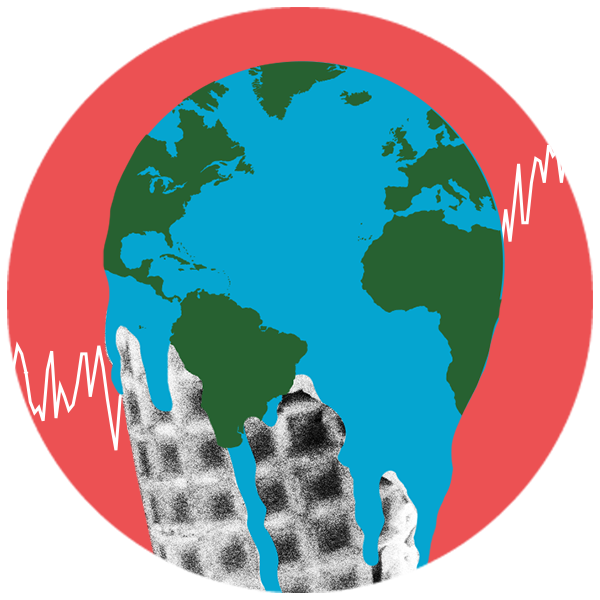
- Climatic change can be a natural process where temperature, rainfall, air current and other elements vary over decades or more. In millions of years, our earth has been warmer and colder than it is now. But today we are experiencing unprecedented rapid warming from homo activities, primarily due to called-for fossil fuels that generate greenhouse gas emissions.
- Increasing greenhouse gas emissions from human action human activity like a blanket wrapped around the earth, trapping the sun's heat and raising temperatures.
- Examples of greenhouse gas emissions that are causing climate change include carbon dioxide and methane. These come from called-for fossil fuels such every bit gasoline for driving a car or coal for heating a edifice. Clearing state and forests can also release carbon dioxide. Landfills for garbage are some other source. Free energy, industry, agriculture and waste disposal are among the major emitters.
- Greenhouse gas concentrations are at their highest levels in 2 million years and keep to rise. Equally a result, the globe is about ane.one°C warmer than it was in the 1800s. The last decade was the warmest on record.
- Many people call up climate change mainly means warmer temperatures. Simply temperature ascent is only the first of the story. Because the Globe is a system, where everything is connected, changes in one area tin can influence changes in all others. The consequences of climate change at present include, amid others, intense droughts, water scarcity, severe fires, rising sea levels, flooding, melting polar ice, catastrophic storms and declining biodiversity.
- People are experiencing climate change in diverse means. It affects our health, power to abound nutrient, housing, rubber and work. Some of the states are already more than vulnerable to climate impacts, such as people living in small isle developing States. Conditions like sea-level rise and saltwater intrusion have avant-garde to the point where whole communities have had to relocate. In the futurity, the number of "climate refugees" is expected to rise.
- Every increment in global warming matters. In a 2018 report, thousands of scientists and regime reviewers agreed that limiting global temperature rising to no more than than 1.v°C would aid united states avoid the worst climate impacts and maintain a livable climate. Yet the electric current path of carbon dioxide emissions could increment global temperature by as much as iv.four°C by the end of the century.
- The emissions that cause climate change come from every role of the world and affect everyone, simply some countries produce much more others. The 100 least-emitting countries generate 3 per cent of full emissions. The ten largest emitters contribute 68 per cent. Everyone must take climate action, but people and countries creating more than of the problem have a greater responsibility to human action first.
- Climatic change is a huge challenge, simply we already know many solutions. These tin can deliver economic benefits while improving our lives and protecting the environment. We too accept global agreements to guide progress, such as the United nations Framework Convention on Climate change and the Paris Agreement. Three broad categories of action are: cut emissions, adapt to climate impacts and finance required adjustments.
- Switching energy systems from fossil fuels to renewables like solar volition reduce the emissions driving climatic change. But nosotros have to start correct now. While a growing coalition of countries is committing to net null emissions by 2050, about one-half of emissions cuts must exist in place by 2030 to go along warming below ane.5°C. Fossil fuel production must decline by roughly 6 per cent per year between 2020 and 2030.
- Adapting to climate consequences protects people, homes, businesses, livelihoods, infrastructure and natural ecosystems. It covers current impacts and those likely in the future. Adaptation will be required everywhere, but must be prioritized now for the most vulnerable people with the fewest resources to cope with climate hazards. The charge per unit of return tin can be loftier. Early warning systems for disasters, for case, save lives and property, and can deliver benefits up to ten times the initial price.
- We can pay the nib now, or pay dearly in the future. Climate action requires significant financial investments by governments and businesses. But climate inaction is vastly more than expensive. One critical step is for industrialized countries to fulfil their delivery to provide $100 billion a twelvemonth to developing countries and so they can accommodate and move towards greener economies.
Sources: IPCC (1), WMO (iv, 7, 10), WMO (4), IPCC (four, 7), UN Climate Action (eight, 10), World Bank (11).
Download PDF
- Man activities have warmed the atmosphere, ocean and state, producing widespread and rapid changes in the atmosphere, ocean, cryosphere and biosphere.
- The calibration of recent changes across the climate organisation are unprecedented over many centuries to many thousands of years. Many changes are irreversible for centuries to millennia, especially in terms of the ocean, ice sheets and global sea level.
- Human-induced climate change affects every region. There is growing evidence of links to farthermost heatwaves, heavy precipitation, droughts and tropical cyclones.
- Global surface temperature volition continue to increase until at least the middle of the century. Unless we brand sharp reductions in greenhouse gas emissions in coming decades, global warming volition exceed 1.v degrees Celsius, subsequently which climate consequences will be even more severe.
- The more the world warms, the greater the changes in the climate arrangement get. This includes more frequent and intense hot extremes, marine heatwaves, heavy atmospheric precipitation, agricultural and ecological droughts in some regions, the proportion of intense tropical cyclones, and reductions in Arctic sea ice, snowfall cover and permafrost.
- Continued global warming volition further intensify the global water cycle, making it more variable, and changing monsoon precipitation and the severity of moisture and dry out events.
- As carbon dioxide emissions rise, the ocean and land volition be less effective at absorbing and slowing the accumulation of carbon dioxide in the atmosphere.
- With further global warming, every region volition increasingly feel changes in the drivers of climatic impacts. Drivers volition exist more widespread at 2 degrees Celsius compared to ane.5 degrees Celsius, and fifty-fifty more then at higher levels of warming.
- Ice sheet collapse, abrupt ocean circulation changes and warming beyond current projections are less likely outcomes but cannot be ruled out.
- Limiting human-induced global warming requires limiting cumulative carbon dioxide emissions, reaching at least net null. Strong reductions in other greenhouse gas emissions such as methane would besides be required.
- Achieving depression or very depression greenhouse gas emissions would pb within years to discernible effects on greenhouse gas and aerosol concentrations and air quality. Discernible differences in global surface temperature would emerge in around 20 years.
Sources: Based on findings and projections from the IPCC's Climate Change 2021: The Physical Scientific discipline.
Download PDF

- The Earth is now nigh ane.1°C warmer than it was in the 1800s. Nosotros are non on rail to encounter the Paris Understanding target to keep global temperature from exceeding one.5°C above pre-industrial levels. That is considered the upper limit to avert the worst fallout from climate alter.
- 2015-2019 were the v warmest years on record while 2010-2019 was the warmest decade on record.
- Global surface temperature has increased faster since 1970 than in whatsoever other 50- yr period over at least the terminal 2000 years.
- On the electric current path of carbon dioxide emissions, temperature could increment past equally much as 4.4°C by the end of the century.
- In 2019, greenhouse gas concentrations reached new highs. Carbon dioxide levels were 148 per cent of preindustrial levels.
- Greenhouse gas concentrations, already at their highest levels in ii one thousand thousand years, have continued to rise.
- Since the mid-1980s, Arctic surface air temperatures accept warmed at least twice equally fast as the global average, while sea water ice, the Greenland water ice sheet and glaciers take declined over the same period and permafrost temperatures have increased.
- Emissions must driblet 7.6 per cent per yr from 2020 to 2030 to keep temperatures from exceeding 1.5°C and 2.seven per cent per year to stay beneath 2°C.
- The emissions gap in 2030, or the difference between necessary carbon dioxide reduction and current trends, is estimated at 12-fifteen gigatons carbon dioxide equivalent (Gt CO2e) to limit global warming to below 2°C. For the 1.v°C goal, the gap is 29-32 Gt CO2e, roughly equivalent to the combined emissions of the six largest emitters.
- To follow a ane.5°C-consistent pathway, the world will need to decrease fossil fuel production by roughly six per cent per twelvemonth between 2020 and 2030. Countries are instead planning and projecting an boilerplate almanac increase of 2 per cent, which by 2030 would result in more than double the production consistent with the 1.5°C limit.
Sources: WMO (1, 9, 10), IPCC (ane, 3, 4, 6), WMO (ii, 5, seven), UNEP (8)
Download PDF

- Adaptation to climate modify safeguards people from higher temperatures, rising seas, fiercer storms, unpredictable rainfall and more acidic oceans. Some people are more vulnerable to these effects, such as those living in poverty.
- Small island developing States are particularly vulnerable without adaptation to storms and bounding main-level rising. For some of these countries, disaster-related economic losses take already been as loftier as 200 percent of the size of a national economy.
- Estimated annual accommodation costs in developing countries are in the range of $lxx billion, but could achieve $300 billion by 2030. Just 21 per cent of international climate finance goes to adaptation and resilience, near $16.8 billion a twelvemonth.
- Globally, a $1.8 trillion investment in early warning systems, climate-resilient infrastructure, improved dryland agriculture, global mangrove protection and resilient water resources could generate $7.ane trillion in avoided costs and social and environmental benefits.
- Over 60 percentage of countries accept nature-based strategies in national climate activeness plans; a similar share has best-selling that adaptation depends on protecting ecosystems and biodiversity.
- Better conditions information along with early alert and emergency direction systems reduce concrete damage and economic losses. Universal access to early on warning systems tin deliver benefits up to 10 times the initial cost.
- Without adaptive measures, the number of people who lack sufficient water for at least one month per twelvemonth will soar from 3.half dozen billion today to more than than 5 billion past 2050.
- Solar-powered irrigation, atmospheric condition alarm systems, new crop varieties and other adaptive measures can help avoid a drop-off in global agricultural yields past up to 30 percent by 2050.
- Improving health systems could assist foreclose 250,000 additional climate- related deaths per year from 2030 to 2050, mainly from avoidable causes such equally malnutrition, malaria, diarrhoea and oestrus stress.
- Worldwide, just 38 percent of small firms have invested in adapting to ecology risks, compared to 60 percentage of large firms. During the COVID-19 pandemic, companies able to withstand disruption were 5 times less likely to lay off employees and more likely to have stable sales.
Sources: GCA (1, 4, 7, 8), IMF (2), UNEP (3), OECD (3), WRI/GCA (5), World Bank (6), WHO (9), ITC (10)
Download PDF

- Public climate finance, including $100 billion that developed countries have agreed to provide to developing countries each year, supports critical infrastructure for accommodation, resilience and the new renewable energy-based economic system.
- Based on the most recent cess conducted by developed countries, full climate finance counting towards the $100 billion commitment continues to autumn curt, reaching $78.9 billion in 2018.
- Although accommodation finance increased more than rapidly betwixt 2016-2018, its overall share of total public finance was only 21 percentage in 2020. Adaptation costs for developing countries may be in the range of $140 billion to $300 billion per year by 2030, and $280 billion to $500 billion annually by 2050.
- Private finance could provide the biggest pool of majuscule. If sufficient international public climate finance is deployed to mobilize private resources, it will be possible to motion from the billions to the trillions required.
- Over 160 firms with $seventy trillion in assets accept joined forces to steer the global economic system towards internet-zero emissions and evangelize Paris Agreement goals.
- The combined global fiscal response to the pandemic was $18 trillion as of March 2021. The same decisiveness is imperative in the response to the climate crisis.
- COVID-19 recovery packages accept not been dark-green, by and big, despite general public support for a green recovery. In the Grouping of 20 countries, $250 billion has been directed to fossil fuels equally opposed to simply $146 billion to clean energy.
- The astringent fiscal impacts of COVID-19 limit the ability of many developing countries to invest in recovery as well every bit climate action. The pandemic pushed half of low-income and to the lowest degree developed countries into debt distress or high chance of it. While some debt relief is available for 34 countries at chance of default, 9 countries are not eligible. They include small island developing States with acute climate vulnerabilities.
- Needed infrastructure investment is around $90 trillion past 2030; new infrastructure must be compatible with climate goals. Investing in resilient infrastructure in developing countries could deliver $iv.2 trillion over the lifetime of new infrastructure. An investment of $ane, on average, yields $4 in benefits.
- Switching to a clean economy could raise $2.8 trillion through carbon price revenues and the redirection of fossil fuel subsidies to public investments.
Sources: United nations 2020 (1-4, vii), UN Climate Action (5), UN 2021 (vi, 8), World Banking concern (9, 10)
Download PDF

- Empowering women and girls to have a voice and a role in decision-making on climatic change-related issues is essential for sustainable development and greater gender equality.
- As early adopters of many new agricultural techniques, first responders in crises, entrepreneurs of green energy and decision-makers at home, women offer invaluable insights and solutions into better managing the climate and its risks.
- The climate crisis is non "gender neutral." It exacerbates existing inequalities, leaving women and girls to feel unique threats to livelihoods, health and safe.
- Women are less able to face climate change due to limited access to and control of environmental goods and services, less participation in decision-making and the distribution of environmental direction benefits.
- During periods of drought and erratic rainfall, many women in low- and lower-middle income countries, who depend on agriculture, piece of work harder to secure income and resource for their families.
- Current climate finance rarely reaches women and their organizations, and just a tiny proportion of funding focuses on their needs, rights and solutions.
- Every bit climate change drives conflict across the earth, women and girls face increased vulnerabilities to all forms of gender-based violence.
- When disasters strike, women are less likely to survive and more likely to be injured due to express admission to information, mobility, decision-making, as well every bit resources and training.
- Women's and girls' health is endangered by climate change and disasters by limiting access to services and health intendance, as well every bit increasing risks related to maternal and child health.
- Extreme heat increases incidence of stillbirth. Climate change besides increases the spread of vector-borne illnesses such as malaria, dengue fever, and Zika virus, which are linked to life threatening maternal and neonatal outcomes.
Sources: United nations Women (i, 3, 4, 5, 7, 9, 10), IPCC (2), UNEP (half-dozen), UNFPA (8)
Download PDF

- Climate action is non a upkeep buster or economy-wrecker. Shifting to a dark-green economy could yield a direct economic gain of $26 trillion through 2030 compared with business-as-usual. This could produce over 65 million new low-carbon jobs.
- Significant investment in infrastructure is needed over the side by side fifteen years, around $ninety trillion by 2030. New infrastructure must be compatible with climate goals.
- Investing in resilient infrastructure in developing countries could deliver $4.2 trillion over its lifetime. An investment of $ane in resilient infrastructure, on average, yields $4 in benefits.
- More compact, connected and coordinated cities are worth up to $17 trillion in economic savings by 2050 and will stimulate economic growth by improving admission to jobs and housing.
- Sustainable agriculture and potent forest protection could generate over $ii trillion per year of economic benefits, create millions of jobs and ameliorate food security, while delivering over a third of the climate change solution.
- Doubling global renewable energy capacity past 2030 could salvage the global economic system betwixt $1.ii and $iv.ii trillion each year, largely due to a massive reduction in costs from pollution.
- Putting a toll on carbon and phasing out fossil fuel subsidies could raise $2.8 trillion that could be reinvested in public priorities.
- In 2020, G20 governments committed $233 billion to activities that support fossil fuel product and consumption, compared with $146 billion to renewable energy, free energy efficiency and low-carbon alternatives such equally cycling and pedestrian systems.
- Better water management could amend economic growth rates in some regions by up to 6 per cent.
- The costs of adapting to climatic change in developing economies may be up to $300 billion by 2030. But investing in resilience may cut post-disaster intervention costs by at to the lowest degree half.
Sources: New Climate Economy (1, 2, 4-7), Globe Bank (3), UNEP and others (8), Earth Bank (ix), IMF (x)
Download PDF

- A green transition, including a shift to renewable energy, the manufacturing of electric vehicles and construction of energy-efficient buildings, will create 24 million jobs by 2030, far more than the 6 meg that could exist lost.
- By 2030, among 163 economic sectors, only 14 are predicted to have employment losses of more than than ten,000 jobs worldwide, and only two, refining and extracting petroleum, show losses of one one thousand thousand or more than jobs.
- If cities in 21 emerging markets prioritize climate-smart growth in their recovery plans, they stand to gain as much as $7 trillion in investments and could create 144 million new jobs by 2030.
- Under certain weather condition, jobs created by the renewable energy industry could full 42 1000000 worldwide by 2050 – more than plenty to offset jobs lost in fossil fuel industries, with more people able to notice employment in manufacturing, installing, operating and maintaining renewable energy systems.
- Jobs in renewable free energy reached eleven.5 million globally in 2019.
- Heat stress could reduce total working hours worldwide by two.2 per cent – a productivity loss equivalent to 80 meg full-time jobs — and could cut global gross domestic product by $2.4 trillion in 2030.
- A circular economy, based on the principles of reduce, reuse and recycle, could create around 6 million new jobs in recycling and waste direction.
- Solar photovoltaic industries created some 3.8 one thousand thousand jobs in 2019. Other big generators of new jobs in renewable energy were biofuels at ii.five million jobs, hydropower at close to 2 million jobs and wind at i.2 million jobs.
- Jobs in renewables are more gender balanced than in the broader free energy field, with women holding 32 per cent of the total in 2019. In fossil fuels, they accept only 21 per cent.
Sources: ILO (1), World Banking concern (ii), IRENA (3), IRENA (four, 8, 9), UN (v), ILO (6), ILO (7)
Download PDF
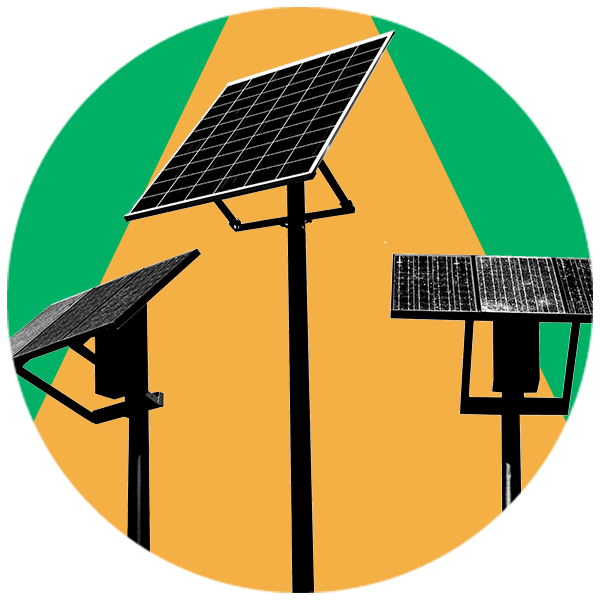
- Despite the COVID-19 pandemic, a tape 260 gigawatts of renewable energy capacity was added globally in 2020, beating the previous record past about fifty per cent.
- Renewables grew near 5 per cent per year between 2009 and 2019, outpacing fossil fuels at ane.7 per cent.
- Although nigh new renewable free energy capacity installations have been made in developing countries in the concluding ii years, developed countries had around four times more capacity per capita than developing countries in 2019.
- In 2018, the share of renewable energy in total energy consumption amounted to 17.1 per cent, with the largest increase in the share of renewables for electricity. The transport and heating sectors prove much slower or no progress.
- More than eighty per cent of all new electricity chapters added in 2020 was renewable with solar and current of air accounting for 91 per cent. Investment in offshore wind hit its highest level e'er at $29.9 billion.
- In 2018, international public financial flows to developing countries in back up of clean free energy amounted to $14 billion, a 35 per cent decrease from an all-time high of $21.9 billion in 2017.
- To limit global temperature rise to 1.5°C in line with the Paris Agreement, energy transition investment will have to increase by thirty per cent for a full of $131 trillion past 2050, yet will yield a cumulative payback of at least $61 trillion past 2050.
- Global investment in renewable power capacity totalled $303.5 billion in 2020, a ii per cent increment from 2019. But to reach global climate goals, annual investment in renewables must at least triple by 2030, for a total increase of 200 per cent.
- Due to the COVID-19 pandemic, global energy use brutal by iv per cent in 2020, and carbon dioxide emissions declined by almost 6 per cent in 2020. But emissions have returned to their upwardly trajectory and in December 2020 were almost 2 per cent higher than in 2019, before the pandemic.
- More half of the renewable chapters added in 2019 achieved lower electricity costs than new coal. New solar and air current projects are undercutting the cheapest existing coal-fired plants. Solar photovoltaics showed the sharpest toll decline over 2010-2019 at 82 per cent, followed by concentrated solar ability at 47 per cent.
Sources: IRENA (ane), IEA and others (two, 3, 5), IRENA (4), UNEP (6), IEA (7), IEA (eight), IRENA (9, x)
Download PDF

- The unsustainable use of land, soil, water and energy for food contributes to greenhouse gas emissions that cause rising temperatures. College temperatures in plough bear on resources to produce nutrient. Upwards to 811 one thousand thousand people in the world faced hunger in 2020, as many as 161 million more than than in 2019.
- Systems to produce, parcel and distribute food generate a third of greenhouse gas emissions and crusade up to eighty per cent of biodiversity loss. Without intervention, food system emissions will likely increase past up to forty per cent by 2050, given rising need from population, more income and dietary changes.
- The food arrangement currently accounts for effectually 30 pct of the globe's total consumption of energy, most nevertheless produced using fossil fuels that generate emissions.
- Over 17 per cent of food is wasted, and up to 10 per cent of global greenhouse gas emissions are associated with food that is non consumed.
- Under higher temperatures, declines in ingather yields are likely. Heat stress also results in impaired quality and increased waste material.
- The body of water has captivated more than 90 per cent of the excess heat in the climate system, making it more acidic and less productive. This along with practices such every bit overfishing threatens marine resources that feed 3.two billion people.
- Changes in snow cover, lake and river ice, and permafrost in many Arctic regions have disrupted food supplies from herding, hunting, fishing and gathering activities, harming livelihoods and the cultural identity of Arctic residents.
- Many practices tin can advance climate accommodation in food systems, such as erosion control, grazing state direction, genetic improvements for tolerance to oestrus and drought, heterogeneous diets, and reduced nutrient loss and waste.
- Pilot climate-smart agriculture initiatives in a number of countries have additional productivity, lowered emissions, improved soil quality and water efficiency, and increased incomes and climate resilience.
- Consumption of healthy and sustainable diets presents major opportunities for reducing emissions from food systems and improving health outcomes, including through lower consumption of energy- and land-intensive animal-sourced foods.
Sources: United nations (1, 2), FAO (1), IPCC (two, 5, eight, 10), FAO (iii), UNEP (4), FAO (6), IPCC (7), World Depository financial institution (9).
Download PDF

- Climatic change is the single biggest health threat facing humanity. The impacts are already harming health through air pollution, disease, extreme weather events, forced displacement, food insecurity and pressures on mental health. Every twelvemonth, ecology factors accept the lives of around 13 meg people.
- Meeting the goals of the Paris Understanding could save about a million lives a year worldwide by 2050 through reductions in air pollution lonely. Avoiding the worst climate impacts could help prevent 250,000 additional climate-related deaths per year from 2030 to 2050, mainly from malnutrition, malaria, diarrhoea and heat stress.
- The value of wellness gains from reducing carbon emissions would be approximately double the global cost of implementing carbon mitigation measures.
- Over ninety per cent of people breathe unhealthy levels of air pollution, largely resulting from burning fossil fuels driving climate change. In 2018, air pollution from fossil fuels caused $2.nine trillion in health and economic costs, about $viii billion a day.
- Transportation produces around xx per cent of global carbon emissions. Alternatives like walking and cycling are not only green merely also offering major health benefits, such as reducing the risk of many chronic health weather and improving mental health.
- Systems to produce, parcel and distribute food generate a tertiary of greenhouse gas emissions. More sustainable production would mitigate climate impacts and support more than nutritious diets that could prevent shut to 11 million premature deaths a yr.
- Health systems are the main line of defence for populations faced with emerging health threats, including from climate alter. To protect health and avoid widening health inequities, countries must build climate-resilient health systems.
- The majority of countries place wellness every bit a priority sector vulnerable to climate change. Only a huge finance gap remains. Less than 2 per cent of multilateral climate finance goes to wellness projects.
- Healthy societies rely on well-functioning ecosystems to provide make clean air, fresh water, medicines and food security. These help to limit affliction and stabilize the climate. But biodiversity loss is happening at an unprecedented rate, impacting human health worldwide and increasing the take a chance of emerging infectious diseases.
Sources: WHO (1), WHO (2-5), Un (half dozen), WHO (half-dozen, 9), WHO (7), WHO (8).
Download PDF

- Good for you ecosystems can provide 37 per cent of the mitigation needed to limit global temperature rise. Damaged ecosystems release carbon instead of storing it.
- Approximately 25 per cent of the globe's greenhouse gas emissions come up from country clearing, crop production and fertilization, with animal-based nutrient contributing 75 per cent of that.
- With global warming of ane.5°C to 2°C , the majority of terrestrial species ranges are projected to shrink dramatically. Changes in ranges can adversely affect species conservation, profoundly increase local species turnover and substantially increase the take a chance of global extinctions.
- Climate change has been linked to greater risks from zoonotic diseases. For some contagions, increases in temperatures or rainfall can dramatically impact the life cycles of either the pathogen or its vector – the intermediate species that spreads the disease from the original host to humans.
- Coral reefs are especially vulnerable to climate alter and are projected to decline to 10-thirty per cent of former cover at 1.5°C warming and to less than 1 per cent of former embrace at 2°C warming.
- More than 80 per cent of the human diet is provided by plants. Only three cereal crops – rice, maize and wheat – provide sixty per cent of energy intake.
- Fish provide xx per cent of animal protein to about three billion people.
- Roughly 500 million people live in areas that experience desertification. Drylands and areas undergoing desertification are more vulnerable to climate change and extreme events including droughts, heatwaves and dust storms.
- Up to 80 per cent of people living in rural areas in developing countries rely on traditional plant-‐based medicines for basic health care.
- Less than 1 per cent of total land is used for mining, merely the industry has significantly negative impacts on biodiversity, emissions, water quality and human health.
- The $345 billion provided as global subsidies for fossil fuels results in $5 trillion in overall costs, including in terms of the deterioration of nature.
Sources: UNFCCC (1), Un (i, half-dozen, vii, ix), UNEP and others (four), IPBES (two, 3, five, x, 11), IPCC (viii)
Download PDF
Source: https://www.un.org/en/climatechange/science/key-findings
Posted by: jacobsfure1940.blogspot.com
0 Response to "Researchers report on 40 years of ecological research, effects of climate change"
Post a Comment